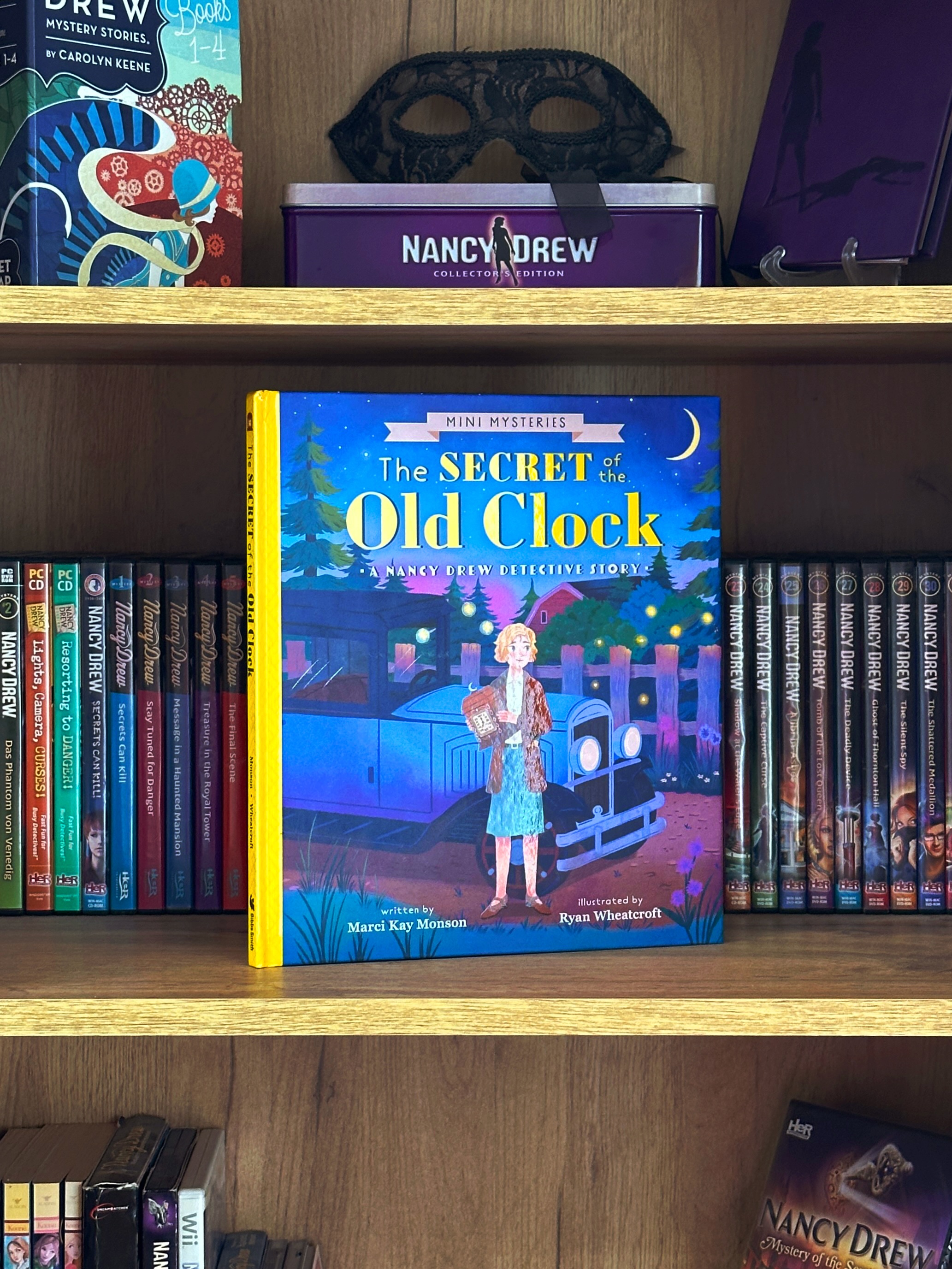
Written by Marci Kay Monson, Illustrated by Ryan Wheatcroft
Published by Gibbs Smith, distributed by Simon & Schuster — 32 pages, ages 4–8, out now.
Thank you to the publisher for sending us a copy! 💛
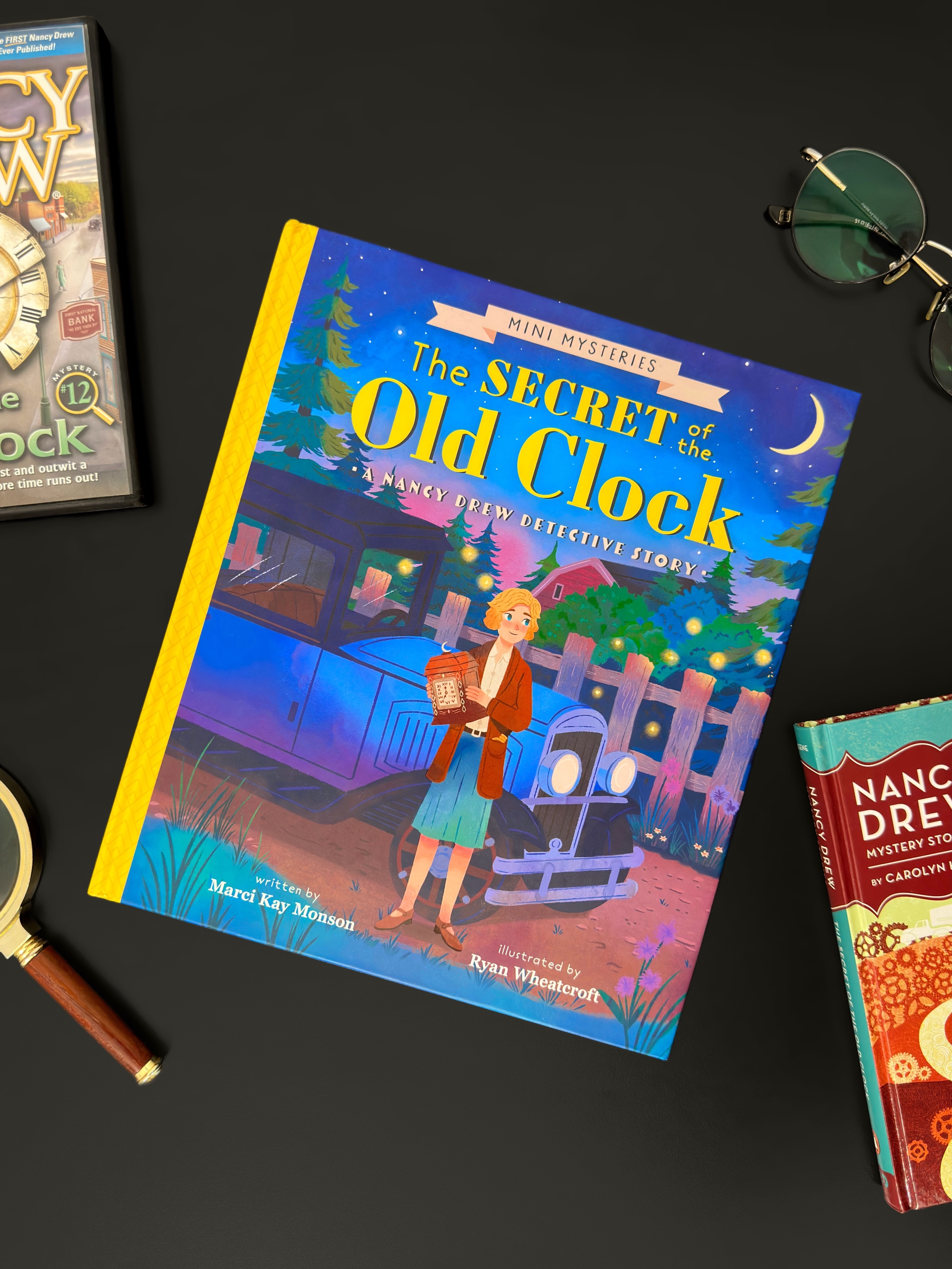
Here's a detail most fans will miss: this is book #3 in the Mini Mysteries line — and the first one that isn't based on Agatha Christie’s books. The series opened with The Mysterious Affair at Styles and The Mystery of the Blue Train, both Poirot. So Nancy is officially the first sleuth invited into a club that previously belonged to Hercule Poirot alone. For a 1930 debut heroine, that's very good company.
What did we love the most?
It's told in rhyme 🔍
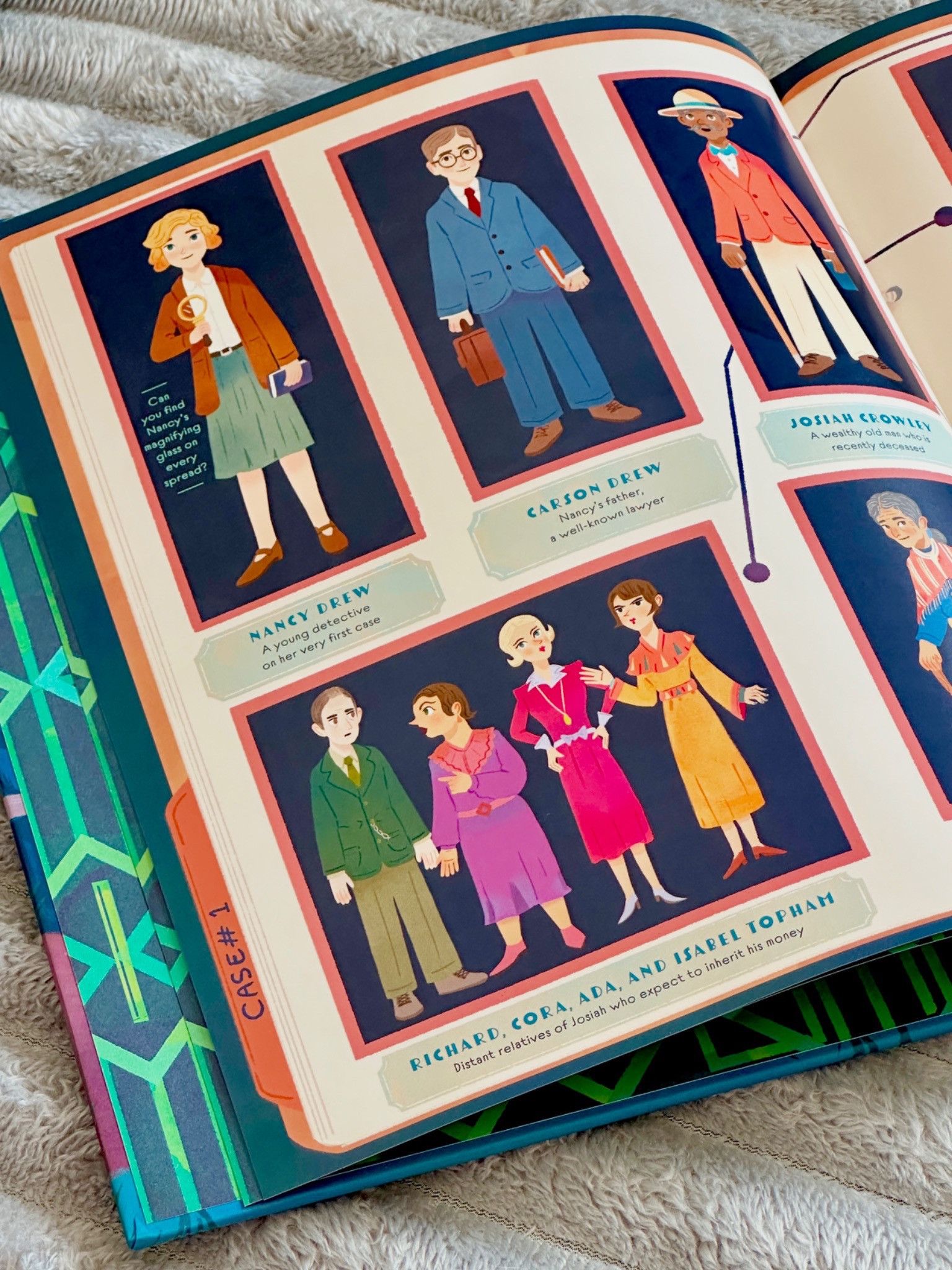
The whole 1930 plot — Josiah Crowley's missing second will, the greedy heirs, the hunt for a hidden compartment — retold in ballad-style quatrains, where the second and fourth lines rhyme. The lines breathe rather than march, which makes it easy to read aloud, and distilling that many suspects into rhyme is a genuinely hard trick. Monson lands it. And the activity boxes, case file and glossary stay in prose, so the puzzles never fight the rhythm.
The names are the real names 🔍
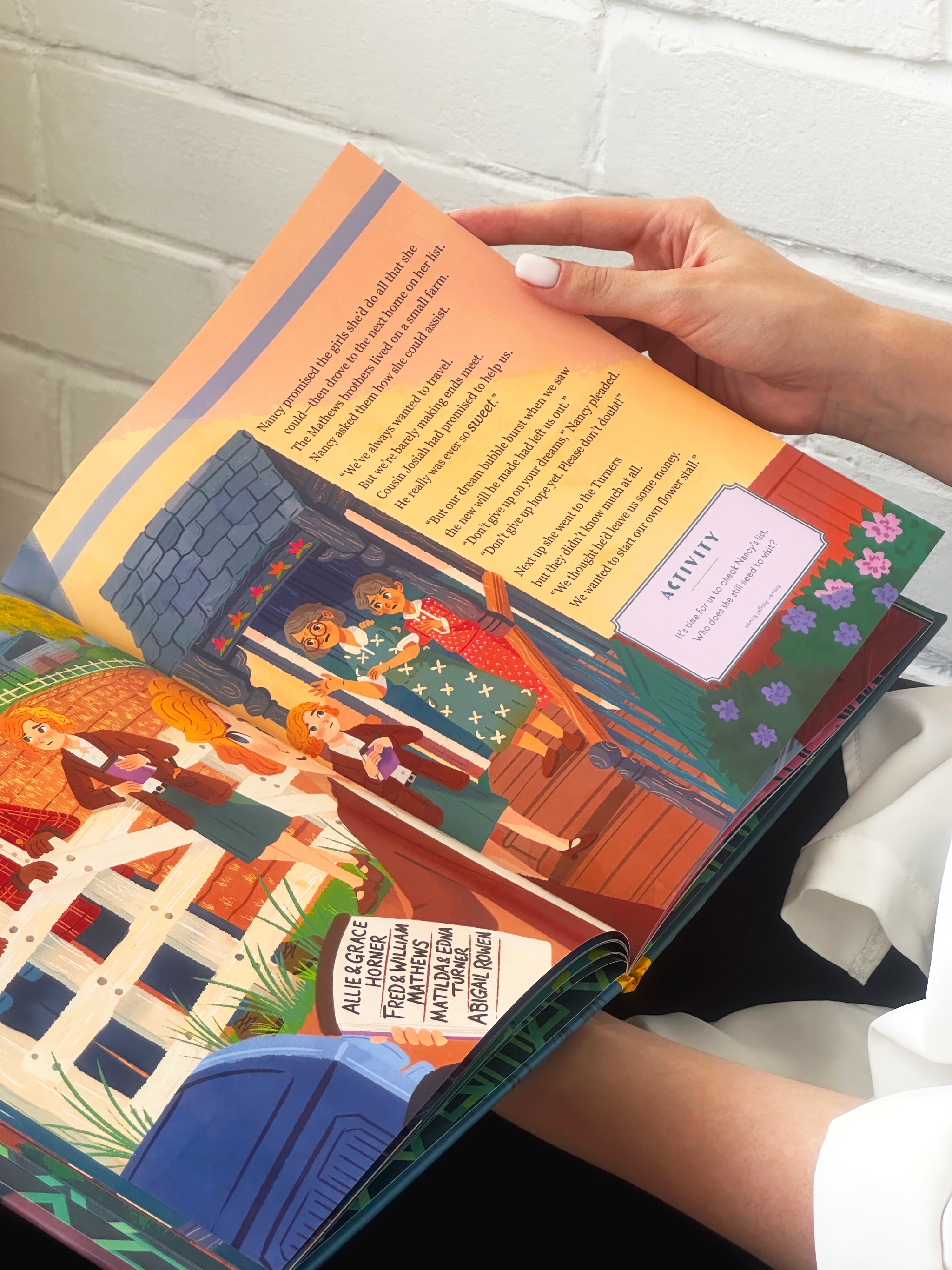
Nancy's case list reads Allie & Grace Horner, Fred & William Mathews, Matilda & Edna Turner, Abigail Rowen. Look closely: those are the names from the original 1930 text, not the 1959 revision most modern readers grew up with. In the rewrite the Horner sisters were replaced by the Hoovers, and Matilda Turner became Mary. Monson went back to the source. We, as longtime readers, couldn't help but grin.
Every spread has an activity 🔍
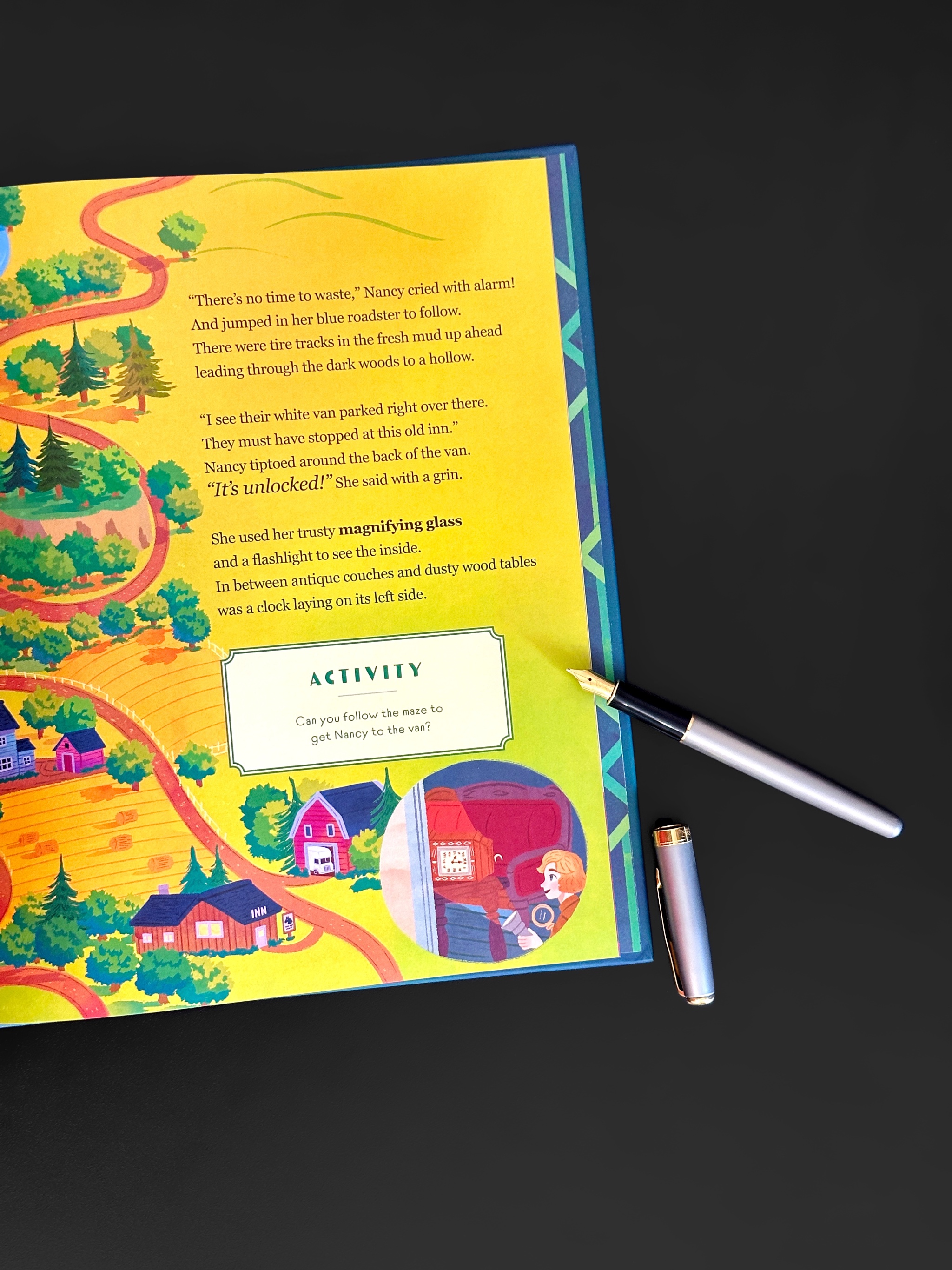
A checklist of who Nancy still needs to visit, a maze to get her roadster to the white van outside the inn, hidden details to spot. Kids don't just watch the case — they work it.
Wheatcroft's 1930s aesthetic 🔍
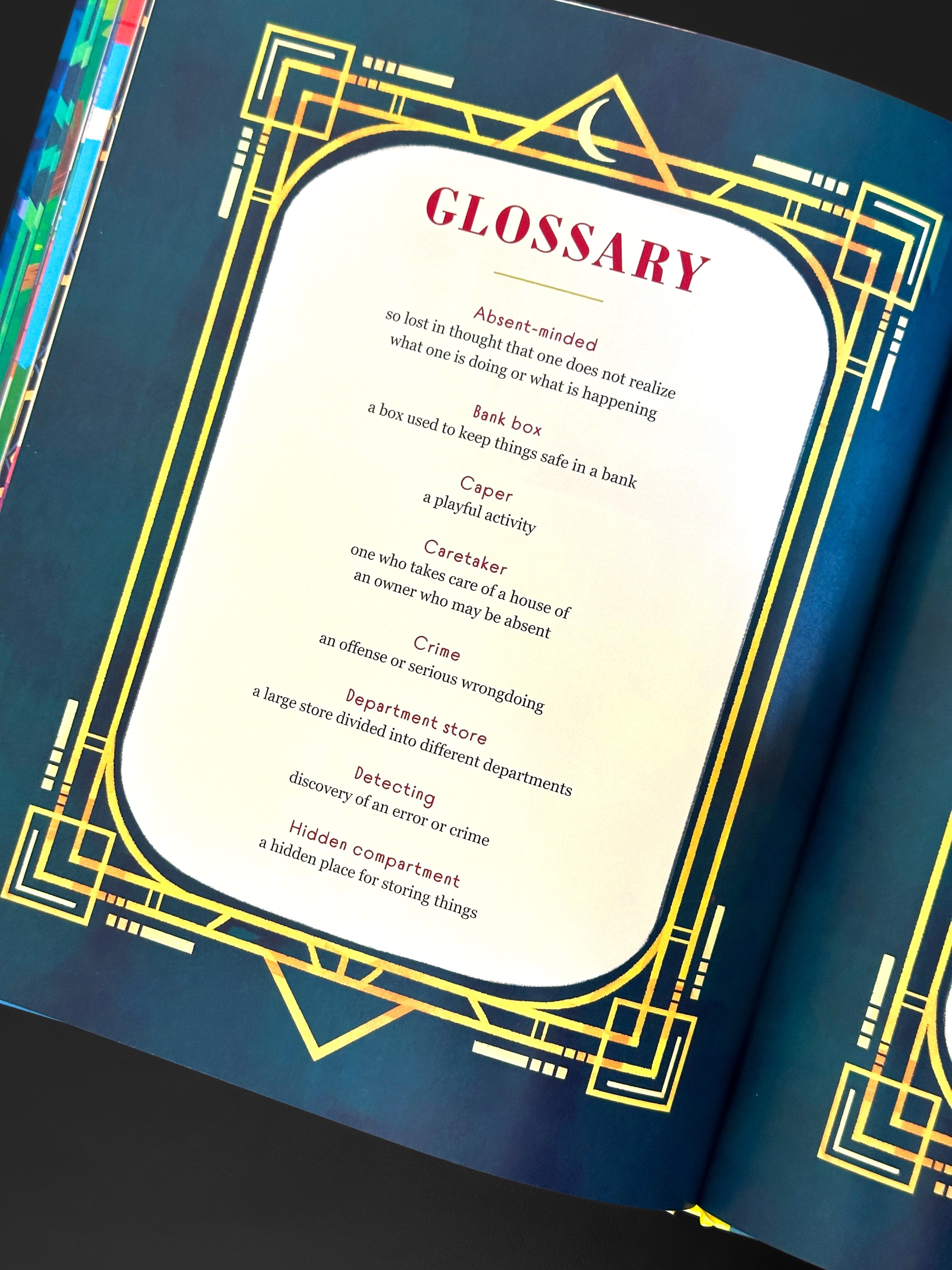
Deep dusk blues, fireflies over the fence, the blue roadster rendered lovingly, and gorgeous art deco gold framing in the back matter. It's a picture book that truly respects the era it's set in.
And the bit we didn't expect to love most: the glossary. Absent-minded, bank box, caper, caretaker, hidden compartment — bolded in the text, defined in the back. It's built for young readers, but as global Clue Crew members, we'll say it plainly: this is one of the friendliest Nancy Drew entry points we've seen for anyone learning English. The rhyme carries the pronunciation, the illustrations carry the meaning, the glossary carries the vocabulary, and the puzzles make you reread. It’s essentially a perfect language lesson wearing a detective's coat 🌍
Verdict
The gentlest possible door into Nancy's very first case — and a legitimately beautiful object for the shelf next to your 1930s originals or PC games. School Library Journal called it accessible to younger readers while still charming fans of any age, and we completely agree 🕵️♀️